


In this episode, we recap our adventures in Kenai Fjords, Glacier Bay, Wrangell-St. Elias, and Lake Clark National Parks, sharing our favorite hikes, glacier cruises, bear viewing experiences, wildlife encounters, and travel tips.
We also reveal our plans for visiting Alaska’s remaining national parks: Denali, Katmai, Kobuk Valley, and Gates of the Arctic. From watching brown bears catch salmon at Brooks Falls to camping above the Arctic Circle and exploring one of the most remote wilderness areas in America, we’re sharing exactly how we hope to experience these bucket-list destinations.
In this episode:
- Kenai Fjords National Park travel tips
- Glacier Bay National Park cruise experience
- Wrangell-St. Elias flightseeing & glacier hiking
- Lake Clark bear viewing adventure
- Our Denali National Park itinerary plans
- Katmai National Park & Brooks Falls bear viewing
- Visiting Kobuk Valley National Park
- Exploring Gates of the Arctic National Park
- Tips for planning an Alaska National Parks road trip and fly-in adventure
Kenai Fjords:
- Hotels: Harbor 360 Hotel or Breeze Inn
- Episode: Kenai Fjords National Park in 2 Days by Land & Sea
- Viator Shop: Kenai Fjords Viator Experiences
- Itinerary: 2 Day Kenai Fjords National Park Itinerary
Glacier Bay:
- Episode: 2 Day Glacier Bay National Park Adventure
- Itinerary: 2 Day Glacier Bay Itinerary
Wrangell – St. Elias:
- Hotels: Kennicott Glacier Lodge or Blackburn Cabin
- Itinerary: 3 Day Wrangell – St. Elias National Park Summer Itinerary
Find a great flight deal to Anchorage with Thrifty Traveler Premium’s flight deals. Use our promo code TSP to get $20 off your first year subscription.
Listen to all of our national parks episodes on Spotify for more inspiration.



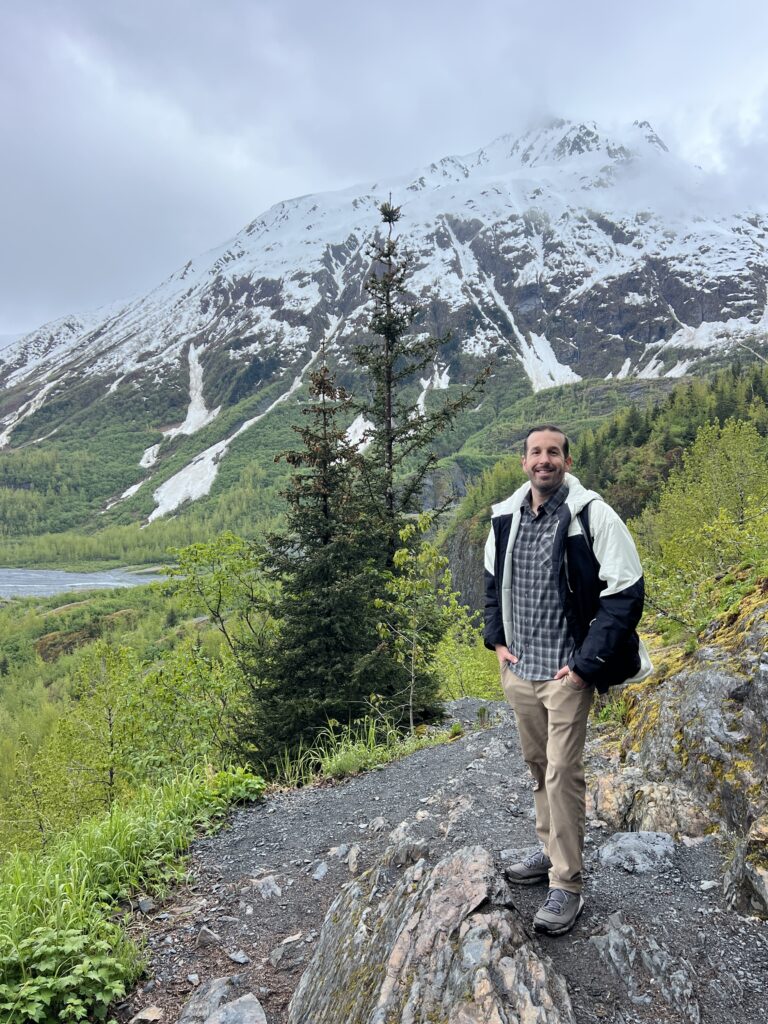
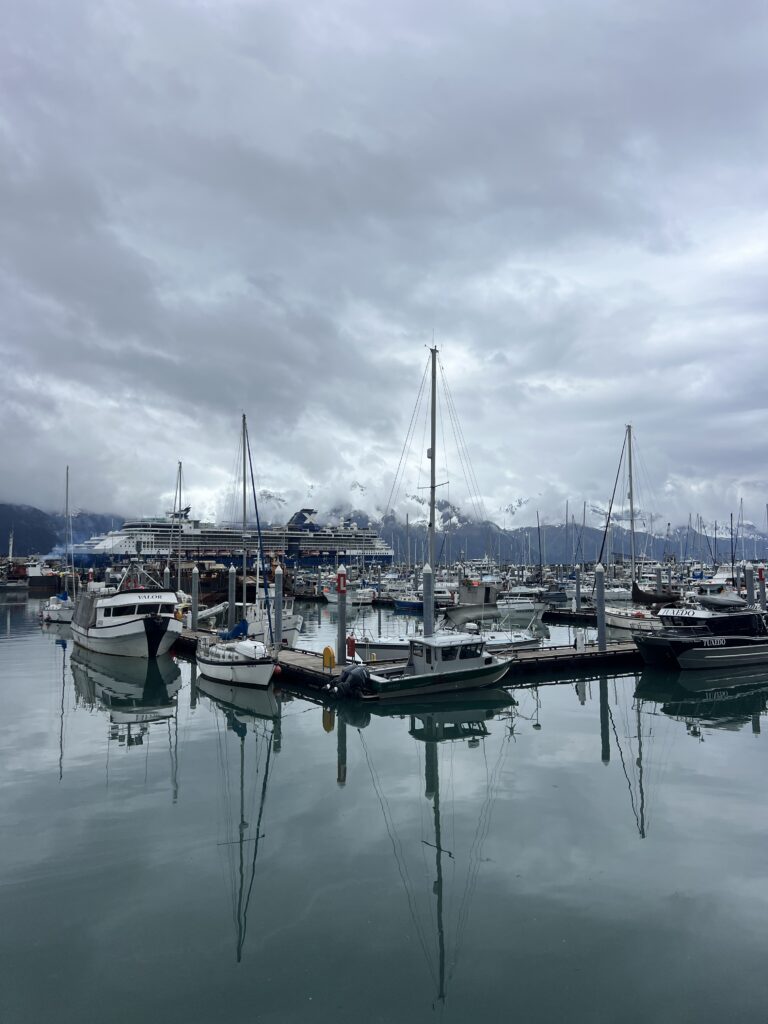
Our Alaska National Parks Journey: 4 Parks Down, 4 to Go
Alaska has always felt like one of those places where you could visit over and over again and still barely scratch the surface.
For us, that has especially been true with Alaska’s national parks.
One of our biggest travel goals is to visit all 63 U.S. national parks. We’re currently at 56, which means there are only seven parks left on our list. Four of those seven happen to be in Alaska.
We’ve already visited four of Alaska’s eight national parks, and each one has given us a completely different experience. We’ve hiked above glaciers, cruised past tidewater glaciers and whales, flown into remote wilderness to see brown bears, and explored one of the largest national parks in the country.
Now we’re turning our attention to the four Alaska parks we haven’t visited yet.
And these last four are going to require a little more planning.
Four Alaska National Parks We’ve Already Visited
Kenai Fjords National Park
Our first Alaska national park experience was Kenai Fjords, and it was also one of our first introductions to just how wild Alaska can be.
We flew into Anchorage and drove about two and a half hours south to Seward, which became our home base for two nights.
One of the highlights was hiking the Harding Icefield Trail. The trail climbs through the mountains above Seward and gives you incredible views of the massive icefield that dominates the landscape.
But the wildlife encounter we had along the way made the hike even more memorable.
We spotted a mama black bear with her cub.
And while seeing bears in Alaska is incredible, the real highlight of our Kenai Fjords trip came the following day when we got out on the water.
We spent about 8.5 hours on a wildlife and glacier cruise, and it ended up being one of those travel days where you almost can’t believe how much you managed to see.
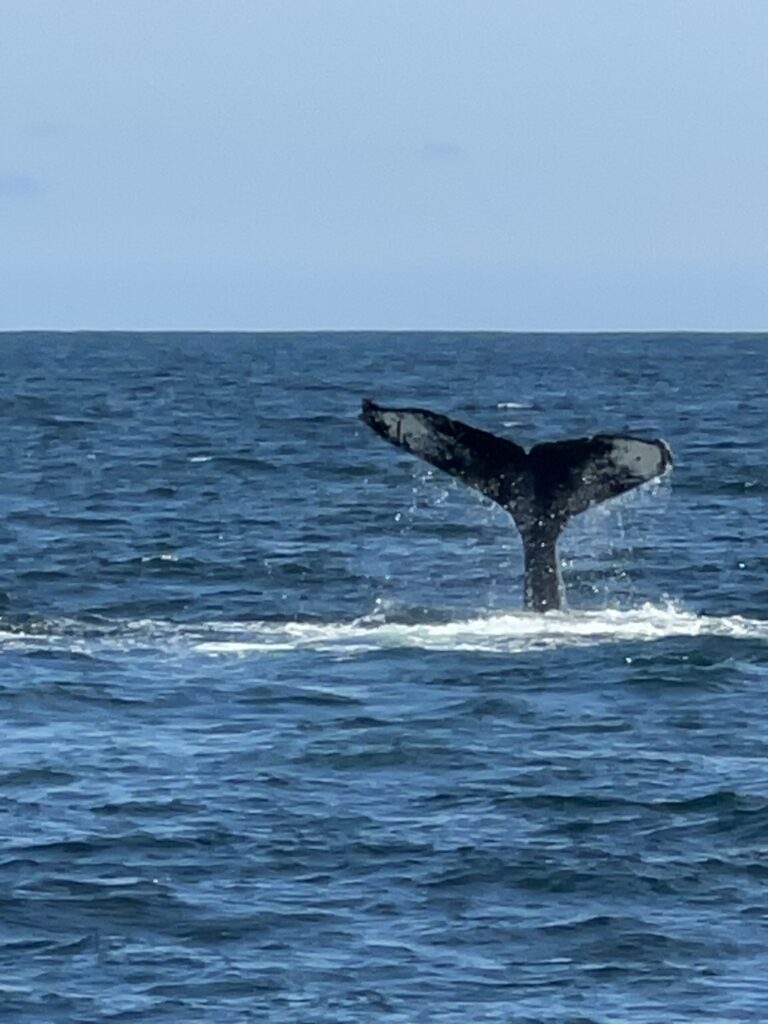
There were tidewater glaciers, mountain goats, humpback whales, orcas, porpoises, sea lions, puffins, and countless seabirds.
The combination of the glaciers and wildlife made the cruise one of our favorite experiences in Alaska. If we were planning the trip again, we’d absolutely do it again.
Kenai Fjords was a great reminder that some national parks are best experienced beyond the hiking trails. Sometimes, you need to get out on the water to really see the park.
Glacier Bay National Park
We visited Glacier Bay National Park on the same Alaska trip as Kenai Fjords, but getting there felt like a completely different adventure.
After our time in Seward, we flew from Anchorage to Juneau and then took a short flight to Gustavus, the gateway to Glacier Bay.
We stayed two nights at Glacier Bay Lodge, which gave us the chance to slow down and actually spend some time in the park rather than simply passing through.
We did some hiking around the lodge, but once again, the water was where the real adventure was.
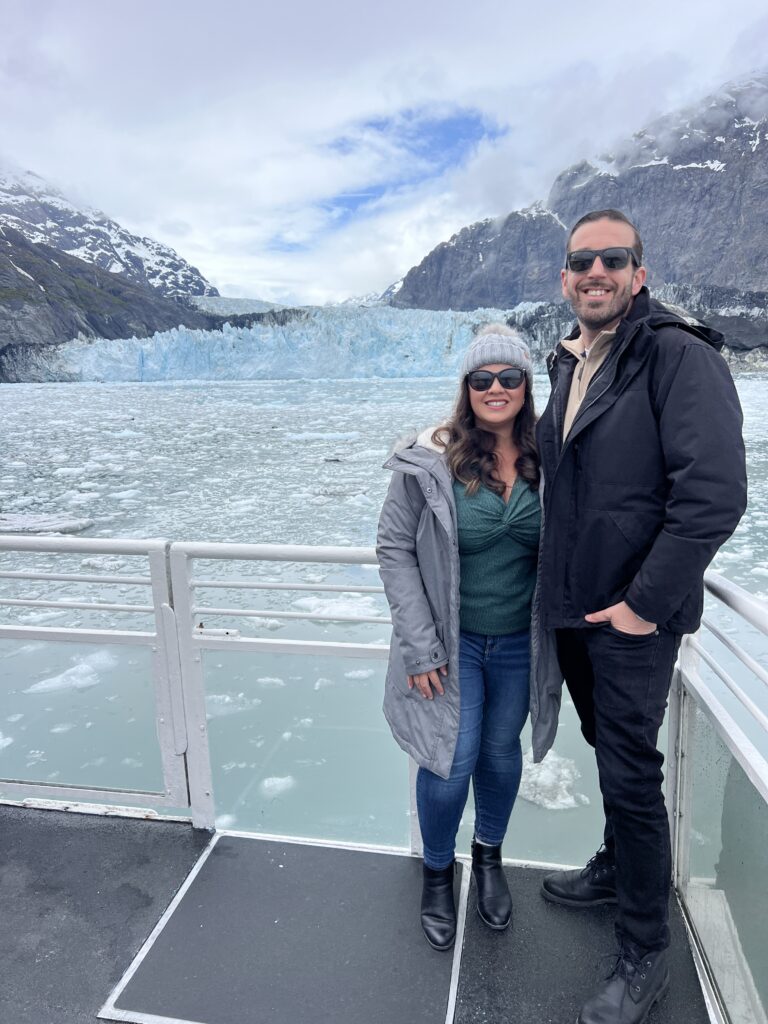
We took a full day cruise through Glacier Bay, and the wildlife sightings just kept coming.
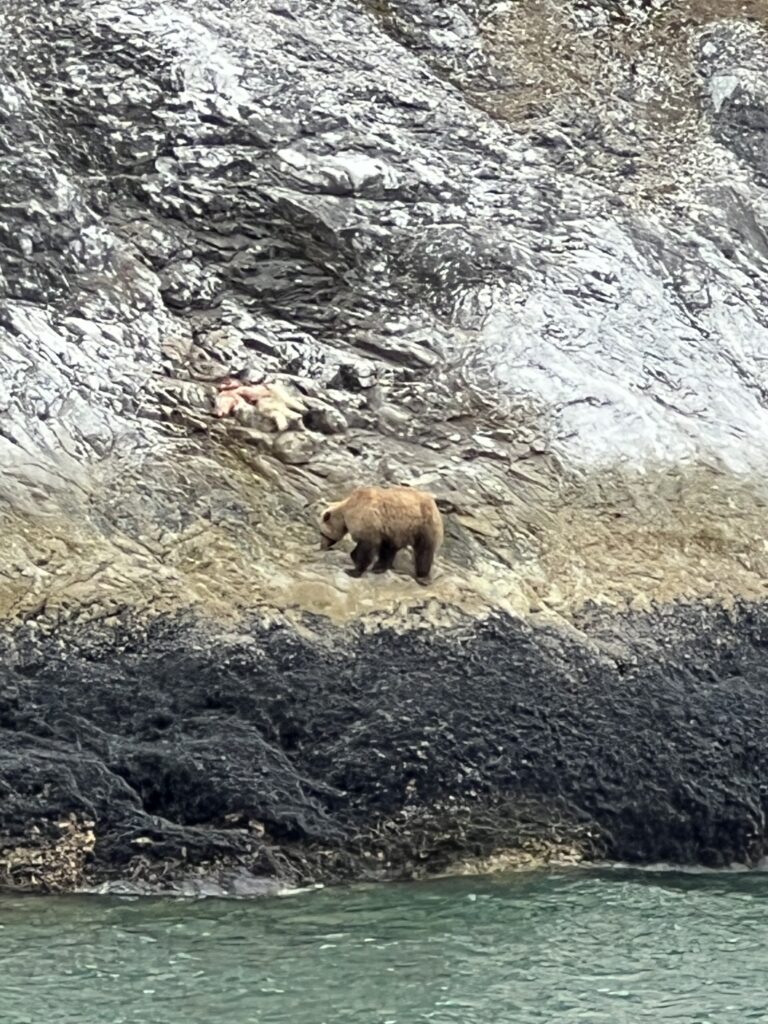
We saw sea otters, humpback whales, puffins, bald eagles, sea lions, mountain goats, and even a coastal brown bear along the shoreline.
Of course, the glaciers themselves were spectacular.
One thing we particularly enjoyed about this cruise was how much we learned along the way. The park ranger talked about the area’s geology, wildlife, and history, including the Huna Tlingit people and their connection to the region.
It made the experience about more than just seeing pretty scenery. We came away with a much better understanding of the landscape we were traveling through.
Wrangell-St. Elias National Park
If there’s one Alaska national park that really drives home just how massive the state is, it’s Wrangell-St. Elias.
It’s the largest national park in the United States, and getting to the area we wanted to explore was an adventure in itself.
We flew into Anchorage, spent the night, and then drove for roughly seven to eight hours toward McCarthy along the historic McCarthy Road.
We stayed two nights at Kennicott Glacier Lodge, which gave us a base for exploring the area.
And there was plenty to do.
We hiked on Root Glacier with Kennicott Wilderness Guides, explored the historic Kennecott Mines National Historic Landmark, and visited the national park visitor center.
But the experience that really put the size of Wrangell-St. Elias into perspective was our flightseeing tour.
We took a 90-minute flight with Wrangell Mountain Air over the Bagley Icefield, Mount St. Elias, glaciers, mountains, and seemingly endless stretches of wilderness.
From the ground, it’s difficult to comprehend how large this park really is.
From the air, it finally clicked.
You could look out the window and see mountains and glaciers continuing far beyond what you could take in at once. It was one of those experiences that made us realize how much of Alaska is still genuinely wild.
Lake Clark National Park
Our most recent Alaska national park adventure was Lake Clark, and this one was all about the bears.
There are no roads into Lake Clark, so we flew from Anchorage with Regal Air for a bear viewing day trip.
We landed directly on the beach in a small bush plane and spent the day exploring Chinitna Bay and Silver Salmon Creek on foot with our guide.
And then the bears started appearing.
We saw more than a dozen coastal brown bears, including mothers with cubs, mating pairs, and bears digging for clams along the beach and grazing in the meadows.
One of the wildest moments came when we ate lunch on the wing of our plane while watching two bears forage just yards away.
It was hard to believe that we were standing in the middle of such a remote place, watching these animals go about their normal day.
There weren’t crowds or viewing platforms separating us from the landscape. We were simply out there in the wilderness with our guide and the bears.
That made Lake Clark one of the most unforgettable wildlife experiences we’ve had.
Four Alaska National Parks Left
Now comes the fun part.
We have four Alaska national parks left to visit: Denali, Katmai, Kobuk Valley, and Gates of the Arctic.
And unlike some of the parks we’ve already visited, these aren’t going to be simple road trip stops.
Three of the four are so remote that flying in is the most practical way to reach them.
We’re still figuring out exactly how each trip will come together, but we already have some big ideas.
Denali National Park
Denali is probably the most recognizable name on our remaining list.
It’s home to North America’s tallest peak and more than six million acres of wilderness.
We’re hoping to spend several days here rather than rushing through.
Our plan is to combine hiking with a bus trip deep into the park, giving us the opportunity to experience the landscape and hopefully see some of the wildlife that calls Denali home.
We’re also interested in driving the Denali Highway, a remote gravel road known for mountain scenery, tundra, and wildlife.
We’re hoping to have the flexibility to spend time both inside the national park and exploring the surrounding area.
And, of course, we’d love to see Denali itself on a clear day.
Katmai National Park
Then there’s Katmai, which might be the park we’re most excited about for wildlife.
Katmai is famous for the brown bears that gather at Brooks Falls to fish for salmon.
Our dream would be to spend at least two nights in the park so we aren’t trying to squeeze the experience into a quick day trip.
We’re looking at either staying at Brooks Lodge or camping nearby, depending on availability and how we ultimately decide to structure the trip.
We also want to experience the other side of Katmai by taking the Valley of Ten Thousand Smokes tour.
The valley was created by the massive 1912 eruption of Novarupta, and exploring that landscape would give us a completely different experience from the famous bears at Brooks Falls.
So yes, we want the bears.
But we also want to see the volcanoes and the otherworldly landscape that makes Katmai much more than just a bear destination.
Kobuk Valley National Park
Kobuk Valley is where our Alaska national park plans start getting really remote.
Located above the Arctic Circle, Kobuk Valley is known for the Great Kobuk Sand Dunes, which rise out of an Arctic landscape of tundra, mountains, and the Kobuk River.
It’s also one of the least visited national parks in the country.
Our ideal plan would be to travel by boat from Ambler into the park, camp for one or two nights, and spend time exploring the dunes.
There’s something especially appealing about camping here because it would allow us to slow down and really experience the isolation of the park rather than flying in, landing for a few minutes, and leaving.
We’re already talking with Onion Portages about what could be possible.
If that plan doesn’t work out, our backup option would be a flightseeing trip that lands in the park briefly.
But we’re definitely hoping we can make the overnight adventure happen.
Gates of the Arctic National Park
And then there’s Gates of the Arctic.
This might be the most intimidating park left on our list.
There are no roads, no established trails, and no developed facilities in the park. It’s about as far from a traditional national park road trip as you can get.
We’re currently looking at a couple of different ways to experience it.
One option is an overnight guided trip with experienced guides who can take us into the wilderness and help us navigate the landscape safely.
The more adventurous idea would be to get dropped off by bush plane, packraft down a river through the park, and eventually meet up with a boat for pickup.
That option would obviously require significantly more planning, but the idea of traveling through Gates of the Arctic that way sounds incredible.
Our backup plan is another flightseeing experience with a short landing in the park.
Either way, we want the experience to feel like more than simply checking the park off our list.
Why Alaska Has Been Such a Big Part of Our National Park Journey
One of the things we’ve realized while working toward all 63 national parks is that there’s no single way to experience a national park.
Some are road trip parks.
Some are hiking parks.
Some are best experienced from a boat.
And some require a bush plane, a guide, or a whole lot more planning.
Alaska has really driven that home for us.
Kenai Fjords and Glacier Bay gave us incredible experiences on the water. Wrangell-St. Elias showed us the scale of Alaska from the air. Lake Clark gave us one of our most memorable wildlife encounters.
And the four parks we have left are going to challenge us in completely different ways.
We’re going to have to figure out logistics, transportation, guides, weather, camping, and how much time we actually want to spend in some very remote places.
That’s part of what makes these parks so exciting.
We aren’t just planning another national park road trip.
We’re planning some adventures that will require us to get pretty far outside our comfort zone.
What’s Next?
With 56 of the 63 national parks completed, we’re getting very close to the finish line.
But we’re not necessarily trying to rush through those last seven.
Especially with Alaska.
We want to experience these parks in a way that makes the trip memorable, even if that means more planning, more time, and a few logistical challenges along the way.
If you’ve visited Denali, Katmai, Kobuk Valley, or Gates of the Arctic, we’d love to hear how you did it.
Send us a DM and tell us what your experience was like, especially if you did something beyond the typical flightseeing or day trip.
Because we’re still planning these adventures, and we’re always looking for ideas from people who have actually been there.
And if you’re working on your own Alaska national park adventure, be sure to check out our other Alaska episodes and itineraries. We’ve already done a lot of the research the hard way, and we’re continuing to build out resources as we work toward those final seven parks.
Four Alaska parks down. Four more to go.
0:35
And get ready to embark on a new adventure with us around the globe.
Hey squatties, welcome to this week’s Just the Tip.
Today you have me, Brittany and Jamal as your host and we are going to give you an update on our progress and plans that we have for the 8 Alaska National Parks.
0:51
Yes, so we’ve mentioned it many times before.
If you squatties have heard and listened, if there’s any new listeners out there, we have a bucket list goal of visiting all 63 U.S.
National Parks we’re currently at #56 which means we only have 7 parks left to visit and four of those are in Alaska.
1:12
And since Alaska is home to 8 national parks and we’ve now visited 4 of them, we thought it would be a fun recap to talk about the parks that we’ve already explored, our experiences there and share a little bit about the parks that we have yet to visit yet.
Yeah, some of you squatties have reached out and have said like, oh, you guys would like to see where we are with the progress, with the national parks.
1:33
And so with Alaska having eight national parks and a lot of them being really difficult to get too, we thought this would be just like a really fun way to talk about some of them.
I just mentioned that we’ve been to four of them, so we have episodes on three of them out so far, Kenai Fjords, Glacier Bay and Rangel St.
1:52
Elias on Tuesday.
Lake Clark is dropping, so that’ll be available for you too.
But we’re going to give her a little recap of that now as well.
And we are going to start with the parks that we have visited.
Yeah.
And the first one is going to be Kenai Fjords National Park.
2:07
And I honestly think this is probably the easiest National Park in Alaska to maybe get to other than Denali.
So this park is only 2 1/2 hours from Anchorage via driving and you have to go to the coastal town of Seward.
2:23
Yeah, Seward serves as the gateway to the National Park.
We actually spent two nights here and it gave us time to experience both the park and the town.
Kenai Fjords National Park is known for its massive glaciers, rugged coastline, abundant wildlife, and the Harding Ice Field, one of the largest ice fields in the United States.
2:42
Yeah, and so during our visit, we drove in from Anchorage and when we arrived in Seward, we kind of just got some coffee, checked the town a little bit, went to the National Park visitor Center ’cause it is actually in the town of Seward, not in the park itself.
2:58
Got some maps, spoke to the Ranger seen and learning a few things and then we decided to go into the park.
One of the small sections that is available by land to get on because most of this park of you don’t know what a fjord is, it’s an area, an inlet that’s carved by glaciers creating these massive towering like cliffs and inlets, etcetera.
3:19
So really a park to be seen on the water, but you can do it via land as well.
They do have a major glacier here called Exit Glacier, part of the Harding Icefield.
And so we went into the park, did a hike here, got views of glacier, and when we came down we were fortunate enough to run into a Mama black bear and her cub from a safe distance, which was a really cool experience.
3:41
Yeah, what a highlight.
So it was really great trip.
And that was day one, day 2.
We actually ended up going on an 8 1/2 hour wildlife and glacier cruise with major marine tours the following day.
That honestly was the highlight of this National Park.
3:58
The best way to experience this National Park, I would say, is by water.
We were so lucky that we saw humpback whales, orcas, porpoises, sea lions, puffins, so many seabirds.
So we got the wildlife aspect of it, but we also got the landscape aspect of it as well.
4:16
And we saw towering tidewater glaciers, incredible mountain scenery, and oh, we even saw mountain goats on land as well.
Yeah.
And if you don’t know what a tidewater glacier is, I mean, I guess you could kind of put it together by the name, but you see lots of glaciers.
They are on land.
4:31
Of course, glaciers have to start on land, right?
But a tidewater glacier is a glacier that in the water itself, whether it be a Bay, a fjord, directly into the ocean, doesn’t really matter.
The end of the glacier is actually in the water, so we’re sailing these multiple inlets, seeing all this wildlife, seeing the cool shore formations, and then coming across tidewater glaciers, which is just an amazing experience and thing to see in person, let alone up close on the water.
5:01
I really do love all of the national parks we’ve been to so far in Alaska, but if we ever do go back to King Knife Woods, I would book this tour again.
I will link the tour in the show notes.
It was absolutely incredible.
What a great way to spend in the National Park.
And also if you are planning your own trip, be sure to listen to our Key Knife Yards National Park episode.
5:22
And we have a Key Knife Yards National Park itinerary where you can get it on shoptravelsquad.com and we’ll link everything in the show notes.
Yeah, and before we get further into this episode, squatters, we want to just say if you are thinking about Alaska, one of the best ways to save money because Alaska is a very expensive place to go is by finding great flight deals before you book.
5:44
You’ve heard us say it before.
We’re going to say it again.
We use Thrifty Traveler Premium to help us find discounted flights, mistake fares and limited time deals sent straight to our inbox.
So whether you’re planning a trip to Alaska for your next big adventure or someplace else, go to thriftytraveler.com/premium and you can use our promo code TSP to get $20 off your first year subscription.
6:08
And like we said, it’s a great tool to help your Alaska trip become more affordable or anywhere else you are planning to go.
The next National Park we’re going to talk about is Glacier Bay National Park.
This is actually the second National Park that we had visited, and we did this on the same trip as Kenai Fjords.
6:27
From Anchorage, we flew into Juneau.
From Juneau, we then took a short flight to Gustavus, the gateway to this park.
Yes.
So we spent two nights at the Glacier Bay Lodge, which is the only lodging option that is available within Glacier Bay National Park.
6:42
So it makes it the perfect base for exploring the area.
So Glacier Bay is not available via car.
You have to fly into Gustavus.
Of course there’s cars in this area, but in terms of general roads from Juneau to here or anywhere else, there are none, right?
6:58
You have to get to Gustavus in order to experience this place by land or by boat elsewhere from within here or having your own boat or sailing in Alaska cruise that happens to come through here, right?
There is a ferry option that if you are in Juneau by car you could board a ferry and I think it’s about 6 hours but you could take your car on the ferry.
7:18
Right, But get here to Gustavus.
But even still, once you’re here in Gustavus, you can’t really take your car anywhere else.
Within the park itself.
They don’t really have roads, so you know, there’s that Point being it’s isolated.
But we stayed here at the lodge.
7:35
Really cool experience.
You have hiking trails around in this area.
Of course what you can see in this area is just mountains, meadows, forests, etcetera.
Really cool.
So of course you have the opportunity to come across bears, whether it be black or brown bears, other types of wildlife.
7:52
We saw porcupine hanging in a tree when we were here, which was really cool, but something that you want to do Glacier Bay, you hear Bay, you think water, you want to get out on the water and that’s exactly what we did.
One of the best ways and I truly think only way to see the park is by water tour out here in the Bay to the glaciers as well.
8:12
Yeah, Glacier Bay National Park is known for its massive tidewater glaciers, the still capped mountains, pristine wilderness and incredible wildlife.
We ended up doing a day cruise in Glacier Bay.
We saw an incredible amount of wildlife.
8:27
We saw sea otters, humpback whales, puffins, bald eagles, sea lions, mountain goats.
But the coolest part was we actually got to see a coastal brown bear guarding its kill, or a dead mountain goat along the shoreline.
Yeah, I mean, there’s no way you can get to this area without the bear having to walk along the jagged rocks and sheer sea Cliff to get around to this area.
8:52
So he came.
He has the mountain goat kill.
What’s really cool is on the boat, there is a park Ranger who’s kind of telling you information about the park, the wildlife, of course, even the glaciers itself.
She was saying that she thinks, in her opinion, that the mountain goat had actually fallen off of the Cliff, which, I mean, they are very good climbers and in narrow areas, but of course, things happen, right?
9:15
But she was saying that’d be hard pressed for the bear to just wonder all the way out here, try to climb up this Cliff.
She thinks that he found it, but still really cool to see from the water a giant coastal brown bear guarding a carcass of sorts of a mountain go.
So that was really cool to see land wildlife versus all the sea wildlife that we saw on the water as well.
9:37
But of course, you’ve seen the sea life along the way.
At the very end of the Bay is where you have the majority of the glaciers.
You’re seeing all of these glaciers, multiple ones that they have out here.
And just what an incredible.
Yeah, it was such a good day.
We spent several hours out on this boat tour and the park Ranger, she just shared a lot of knowledge about the history of the area, wildlife facts, and she just kept everyone engaged.
10:02
So it was really fun and interactive as well, on top of being an incredible scenic cruise.
If you’re planning your own trip, of course, be sure to go back and listen to our Glacier Bay National Park episode and download our Glacier Bay National Park itinerary from our website, shoptravelsquad.com and we’ll link both in the show notes for you guys.
10:25
So the next National Park that we’re going to talk about is Wrangle St.
Elias National Park.
If you listen to our episode on Tuesday, this is the National Park that we did a deep dive into.
We spent two nights here.
We actually flew into Anchorage, spent the night, and then we made the 8 hour scenic drive to McCarthy via the historic McCarthy Rd. the only Rd. leading.
10:48
It’s actually not the only Rd. leading into the parks, but it’s leading into the most popular area.
We spent two nights in Kennecott at the Kennecott Glacier Lodge and this was the perfect base for exploring Rangel St.
Elias National Park.
Yeah, and Rangel St.
Elias is a really beautiful National Park, but cool for lots of reasons.
11:06
It is the largest National Park in the United States.
It’s known for its towering mountains, massive glaciers, the historic mining sites that are within the park, and its remote wilderness.
But despite its enormous size, it’s one of the least visited national parks, making it an incredible destination if you’re looking to experience Alaska without the crowds.
11:28
So we did some cool things while we were in the National Park.
We hiked the Root Glacier with Kennicott Wilderness Guides and we explored the Mines National Historic Landmark.
We visited the National Park visitor center.
We actually visited 2, one in Copper Center, which technically isn’t in the park, and then one in Kennicott.
11:47
And then the highlight was we took a 90 minute flight scene tour with Wrangle Mountain Air over the Bagley Ice Field.
We saw Mount Saint Elias, we saw countless amounts of glaciers, snow capped peaks.
It was truly incredible, super scenic and it is one of the best ways to experience the park.
12:06
We were up there for 90 minutes and then our pilot was like, wow, you guys, you’ve seen 10% of the park.
That’s how massive this park is.
It’s massive and other than the fact that all I can say is this just absolutely breathtaking and beautiful from the air.
I could go on for a long time.
This is a mini episode, so if you did not listen, listen to this Tuesday’s episode where we talked about Rango San Elias.
12:26
We talked more, of course, in depth about the things that we saw, our flight experience.
So go and listen to that.
If you’re planning your own trip, be sure to listen to our full Rango San Elias National Park episode that was just aired this Tuesday and download our detailed itinerary from shoptravelsquad.com and we’ll link both in the show notes.
12:47
So the last of the Alaska National Parks that we’re going to talk about that we have been to so far is Lake Clark National Park, which we do have a upcoming episode where we go into greater detail on our experience here.
But we flew from Anchorage on a bear viewing day trip with Regal Air, one of their most popular ways to experience the remote wilderness of Lake Clark National Park.
13:11
And since there are no roads into the park, flying or taking a boat are the only ways to go.
And flying is the most practical and common way to visit.
Our tour took us to two areas, Chinetna Bay and Silver Salmon Creek, and we spent the day exploring beaches and meadows on foot with our guide and seeing the coastal brown bears.
13:31
Right.
And so Lake Clark National Park is known for the rugged mountains, turquoise lakes, even active volcanoes are here, salmon filled rivers, and it is one of the best bear viewing experiences that you could have in Alaska.
It’s also one of the least visited national parks offering an incredible opportunity to experience the Alaskan wilderness with very few people around.
13:53
I know I said that about Rangle St.
Elias, but it is also very true of Lake Clark.
When we landed on the beach of Lake Clark, we were actually for a little while the only plane on the beach.
They were saying in peak season, which we were actually peak season.
It just wasn’t the best day to go that there could be 7-8 planes lined up on the beach.
14:13
But when we first landed, we were the only plane there which was incredible to have the hue wings of the coastal brown bears all by ourselves.
Yeah, and during our visit, we watched more than a dozen coastal brown bears, including several mothers with their Cubs mating pears, bears digging for clams along the beach and grazing in the meadows, eating grass.
14:35
So what was really cool?
And again, we go more into it in this upcoming weeks episode, so be sure to listen to that.
But we landed directly on the beach in a small Bush plane.
Cool experience for that.
And we enjoyed lunch on the wing of our we were able to watch 2 bears forge just yards away, digging for clams along the beach, and we even stopped at the National Park Service Ranger station for a photo with the park sign.
15:01
But really, seen so many bears in their natural habitat in a highly concentrated area without the crowds made for one of the most unforgettable wildlife experiences that we’ve ever had.
Truly, truly amazing.
And our full episode, it’s about an hour long, airs on Tuesday, and it tells you everything you need to know about visiting this National Park.
15:22
And we have also made a Lake Clark guide and it’s on our website, shoptravelsquad.com.
So the next 4 national parks we haven’t been to but plan to visit within the next few years, and three out of four of them you have to fly into directly because they are so remote.
15:42
You know, a lot of people ask, when they ask which national parks we’ve been to in Alaska, they automatically assume that we’ve been to Denali because arguably Denali is one of the easiest national parks to get to in Alaska and probably one of the most well known.
But we actually haven’t been to Denali.
16:00
Denali is actually home to North America’s tallest peak and has 6,000,000 acres of protected wilderness and some of Alaska’s best opportunities to see wildlife, including grizzly bears, moose, Caribou, sheep and wolves.
Yeah, and because most of the park is closed to private vehicles, visitors experience Denali by hiking, biking or taking one of the parks bus tours along a single park Rd.
16:24
So of course you can drive your car to Denali, but at some point you can’t take your private vehicle anymore.
You have to either do it on the park’s shuttle bus service that they have or tour buses and then of course, exploring on your own by foot.
16:40
Now, this is the one park, of course, that of the four that are left that I said is accessible by Rd. because this is not too far outside of Fairbanks, AK.
So Fairbanks would be your home and gateway to Denali.
And I’m excited for the opportunity when we go.
16:57
One of the reasons why we haven’t gone is part of the park.
I think even still to the buses and the tours is closed because what they had a landslider doing construction on.
It but it’s supposed to be fixed this summer, so we’ve kind of held off on going.
Right.
But this is arguably one of the easier ones to get to, no doubt along with Kenai Fjords that we talked about a little bit earlier, but supposed to be one of the most epic and scenic national parks that Alaska has.
17:24
But I say that, and then all of the four that we’ve been to have just been so epic in their own right.
So it’s really hard.
How do you rank these?
And we haven’t been there yet, but excited nevertheless for Denali.
Yeah, when we visit, I want to spend a few days there exploring the park by like hiking.
Also, I want to do a bus tour or two because they’re known for seeing the wildlife on those bus tours and I would love to be able to see Denali on a clear day.
17:48
I hear sometimes you can be there and not see Denali because of cloud Clover or haziness, but I would love to see that and drive the scenic Denali Highway, which is a remote gravel road.
And so you do have to have a car that’s allowed on it, but it’s supposed to be absolutely amazing with the mountain views and colorful tundra and wildlife along the way.
18:09
Another National Park that we have not been to, as mentioned as the rest of these ones that we’re going to say here, is Cat My National Park.
And Cat My National Park is one of Alaska’s most remote and famous national parks, best known for its incredible brown bear viewing at Brooks Falls and the dramatic volcanic landscape left behind after a 1912 eruption that happened in the area.
18:33
There are no roads in the park, so most visitors arrive by small plane and stay at Brooks Lodge or camp at the Brooks Lodge Camp or join guided tours.
So you really have to get here by plane or by boat.
Yeah, there is a water taxi that can take you from King Salmon.
18:50
If you do fly into King Salmon, we would love to spend 2 nights in the park at the lodge.
That is our preference.
We’ve actually entered the lottery twice and have not been selected for the lottery twice, but if we have to, I’m willing to camp for two nights.
19:06
They do have a campground, but I hear the spots go very, very quickly.
But I think 2 nights would be perfect to watch the bears fishing for salmon in Brooks Falls.
And I would also really like to take the Valley of the 10,000 Smokes tour, which is like a full day tour where you can see that valley that was created after that large volcanic eruption Jamal was talking about.
19:27
Yeah, and if you are unfamiliar with Cat my and Brooks Falls, maybe by name, I’m sure you’ve probably seen it by sight if you’ve ever seen, like on Instagram, videos that show all the bears congregated at a waterfall catching salmon in their mouth as the salmon are jumping up the waterfall and the stream.
19:45
This is here at Katmai National Park and it’s known because there’s so many of them in a highly concentrated area.
And of course, doing fishing during salmon run season because the food is so abundant.
So really great park, really great experience to be had based off of.
20:02
Everything that we’ve researched and seen and I’m excited for when we finally make it out here.
Although I have heard it is very crowded out here in terms of people.
So that could be something that takes away from the majestic Ness of it, if that’s even a word.
But nevertheless excited.
20:18
The next National Park that we want to get to is Coba Valley National Park.
It’s also a remote National Park in Alaska, one of the least visited as well because it is located above the Arctic Circle.
And what makes it famous is it has sand dunes, massive golden sand dunes surrounded by Arctic tundra, mountains and the river.
20:40
So it is a very unique National Park.
When you think of Alaska, you don’t think of sand dunes in like almost a desert like landscape.
But in the Arctic Circle, they do have deserts.
Yeah, well, the sand for sure, and that kind of makes it feel like a desert.
20:59
I don’t know if it meets the definition of a desert means how much precipitation actually comes, but you are in the Arctic Circle, which I think is really cool.
And in the Arctic Circle, you wouldn’t really actually think that there would be sand in that.
Area, yes, Yeah, It’s not truly a desert.
21:16
It just kind of feels like it.
Exactly, exactly.
But you did not mention that the park is home to the world’s largest Caribou migration, so depending on when you go, you can see that.
So there is abundant wildlife in this area as well.
So this is one of the more difficult ones to get to and it’s one of two that’s located in the Arctic Circle.
21:39
And so a lot of the options that I’ve seen have been to do both Cobuck Valley and Gates of the Arctic, which we’ll talk about next in one flight scene tour where you could touch down by plane in both parks for about 15 to 20 minutes.
21:57
But these flight scene tours or chartered flights are quite pricey, and you’re only spending 15 to 20 minutes on the ground.
And I just feel like I want more out of my experience in these national parks.
Yeah.
So why don’t you tell them a little bit about who you’ve been looking at?
22:14
That way, when we go on this trip, we kind of can give them a general idea of what we’re looking for.
Because realistically, unless you have your own plane, you’re at the whim of the tour companies taking you in.
And quite honestly, yes, I mean, if I’m 20 minutes on the ground, I will count that as having been there versus just flying over.
22:30
But I don’t think for that price, 20 minutes on the ground will satisfy.
So we are looking into alternative options for longer time on the ground, which is harder to find in these national parks that are to follow Cobuk and then the next one we’ll talk about.
So if you harken back several episodes, we went to Des Moines, IA to hit our 48th state.
22:49
While we were in a small little coffee shop called Daisy Chain in Des Moines, I actually saw a Cobuk Valley National Park postcard posted on the wall and I pointed it out to Jamal and then the bartender or the barista the making our coffee, saw that we were looking at that postcard and started chatting with us.
23:10
And he actually had been to all of Alaska’s national parks.
So we started to chat and I was like how did you get to Cobuck Valley?
And he told me that he went with a company called Onion Portages.
This is a newer company and they are still building out the campground that they have in Cobuck Valley, like right on the edge.
23:30
So our ideal adventure would be to travel by boat from a small little town called Ambler into the park, camp for one or two nights and spend some time exploring the sand dunes and just camping.
Camping and exploring the Arctic tundra that’s actually out there.
23:48
Ideally seen the wildlife, etcetera.
So again, there are options that are coming to where you can spend more time, but you might be a little bit more on your own.
But this is an area where Alaska, I mean, you’re on your own.
That in and of itself in such an isolated area is scary.
24:04
But I would feel more comfortable here being alone than a lot of other places.
And especially if they’re building like a campground.
And they were telling us too, that if you utilize their tours, they leave you with a SAT radio if something happens, they can get out there pretty quick if you make the call to them them.
24:20
So lots of things going their way for us to feel like this is the option to do versus just 20 minutes on the ground.
If we can’t for some whatever reason don’t do that or don’t want to do that, the backup plan is to do a flight scene tour that lands in the park.
But we would like to spend a little bit more time and just really experience the Arctic Circle.
24:43
So the last park that we’re going to talk about in the last of the 8 that are in Alaska is going to be Gates of the Arctic National Park.
And it is the northernmost National Park in the United States.
And just like Cobuk Valley within and north of the Arctic Circle, there are no roads, no trails, no developed facilities whatsoever.
25:04
It’s one of the last truly wild places in America, offering an untouched wilderness of mountains, rivers, tundra, and abundant wildlife.
And what I think is really cool is going back to what I said.
No services, no roads, no trails.
25:20
It is just straight wilderness.
Yeah, definitely crazy, Crazy.
But it is also the country’s second largest National Park.
What was really cool about this is Onion Portage is a company we’re just talking about for Cobuck Valley.
25:36
They also go to Gates of the Arctic.
And one of the ways we are thinking about experiencing Gates of the Arctic is they do offer an overnight guided trip.
And so you go up the river by boat.
You have a captain of the boat who also serves as your guide.
25:51
You spend the night up there and then the next day you take the boat back down.
And so it’s, I don’t know about a 24 hour trip.
The other option is you have that same captain take you up four hours and they leave you there with a pack raft and all of your camping supplies and you pack raft back down the river in about four days.
26:14
Yeah.
So on your own for four days in such remote wilderness, that’s a little scary.
I would prefer it with the guide, but obviously less time in the park, more expensive to do it with the guide.
But of course, onion portages would give you the pack wrap equipment and of course, and so we were talking pricing, etcetera.
26:33
Alternatively, the other options if you go with other tours that we have really looked at is the same as COVID Valley.
You fly, you land for 20 minutes, that’s about it.
Obviously, there are some other ones that I have seen that are kind of similar to this where they’ll fly you in you spilled multi days like pack rafting down within the park with guides.
26:52
But those trips are sometimes if you look at the prices, let alone for a single, but for two people like 10s of thousands of dollars.
So it really depends on what you’re trying to do in there.
And yes, that would be epic.
But is that what somebody wants?
I don’t know.
I think that one day overnight would be the appropriate amount of time for us because again, I feel like spending 20 minutes on the ground is not enough.
27:13
Yeah, the only other option we really have is to drive, what, the Dalton Highway up and then hike 5 miles into the park.
Yes, that is an option.
So the Dalton Highway, which runs to I believe it’s borough Alaska, which will get you to the Arctic Ocean, runs at some point parallel to Gates of the Arctic.
27:32
It does not go through the park.
Again.
You have that five mile stretch.
So you would have to leave your car, hike in, but you’re still on your own at that point.
And it’s like, do you want to hike 5 miles in to just touch the border, then 5 miles back and that’s 10 miles in a day.
Doable, but it’s also like, how much time do you want?
27:50
So maybe if somebody brought their own equipment, they could get within the park and do it for a day.
But then you’re also still subject to just being in that one area.
So you’d have to do your research of if I’m hiking in like where’s the appropriate spot to see the coolest thing, you know?
So that’s kind of tough also.
28:06
So squaties, if you’ve been to any of these Alaska national parks that we have not been to, send us Adm because we’d love to know what you did and if you’d recommend it.
And thank you so much for tuning into this week’s Just the Tip.




Comments
Comments Off on 4 Alaska National Parks We’ve Visited + Our Plans for Denali & Katmai